2025 Gold Data and Insight
15 Dec 2025
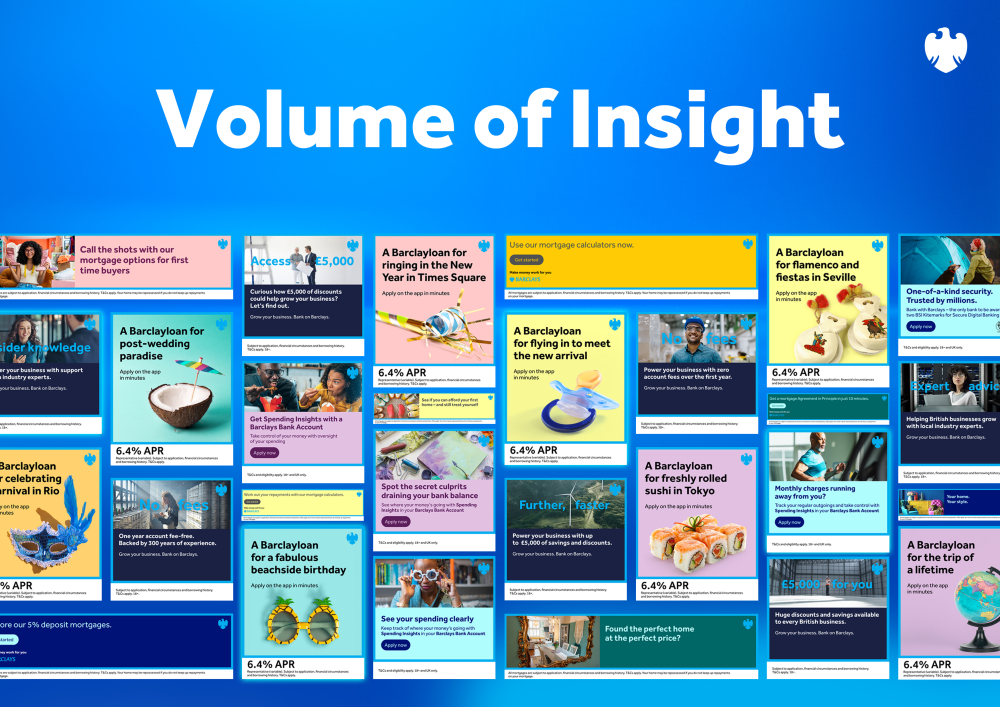
Agency: RAPP and OMD
Client: Barclays
Entry Name: Barclays’ Performance Sprint
Executive Summary
Performance advertising is vital to convert potential customers who are ready to buy, but traditional approaches like A/B testing or limited pilots aren’t fit for today’s AI-driven, algorithmic landscape, and can’t keep up with the complexity and opacity of platform algorithms - the gatekeepers between brands and audiences.
Strategy
The primary objective was to maximise customer acquisition by converting as many in-market individuals as possible. The team reimagined a performance marketing approach from the ground up.
Instead of treating campaigns as isolated bursts, it established a single, unified performance layer: an always-on ecosystem that allowed continuously comparison and optimisation of messages across all product lines.
This abandoned the traditional campaign mindset, shifting to a model where fresh creative is consistently introduced into the market - ensuring the brand could respond dynamically to platform demands and audience trends, while reducing creative fatigue.
Creativity
The creative approach centred on consistency, quality and systematic experimentation. The team began by developing a suite of high-quality templates, ensuring every execution was instantly recognisable as Barclays while allowing for flexibility across formats and platforms.
It drew on the full spectrum of Barclays assets, from recent campaign materials to the brand’s extensive photographic archive, creating a rich tapestry of visual references and echoes. To answer longstanding questions, such as whether photography or iconography resonates more, if text drives performance, and whether people clicked on cute dogs, the team crafted a diverse set of creative executions, each designed to test different visual and messaging strategies.
This experimentation was enabled by a ‘production line’ model of AI-augmented creative development. Copywriters were briefed to focus on specific value factors (for example - convenience, trust, innovation) and relevant product attributes. Using AI agents trained on these factors and how they show up within financial services communications, they generated extensive lists of potential headlines and messages, which were then refined and crafted for maximum impact.
Results
For Judges Eyes Only